Three Orange Butterflies You May Be Seeing This Fall and How to Tell Them Apart
North Texas gardens often fill with orange wings in autumn. Monarchs, Queens, and Gulf Fritillaries fly at the same time of year, and at a quick glance they can look similar. Each species has its own story, its own host plants, and its own field marks that make identification easy once you know what to look for.
This guide helps gardeners recognize each visitor with confidence and understand the caterpillars and plants that support them.
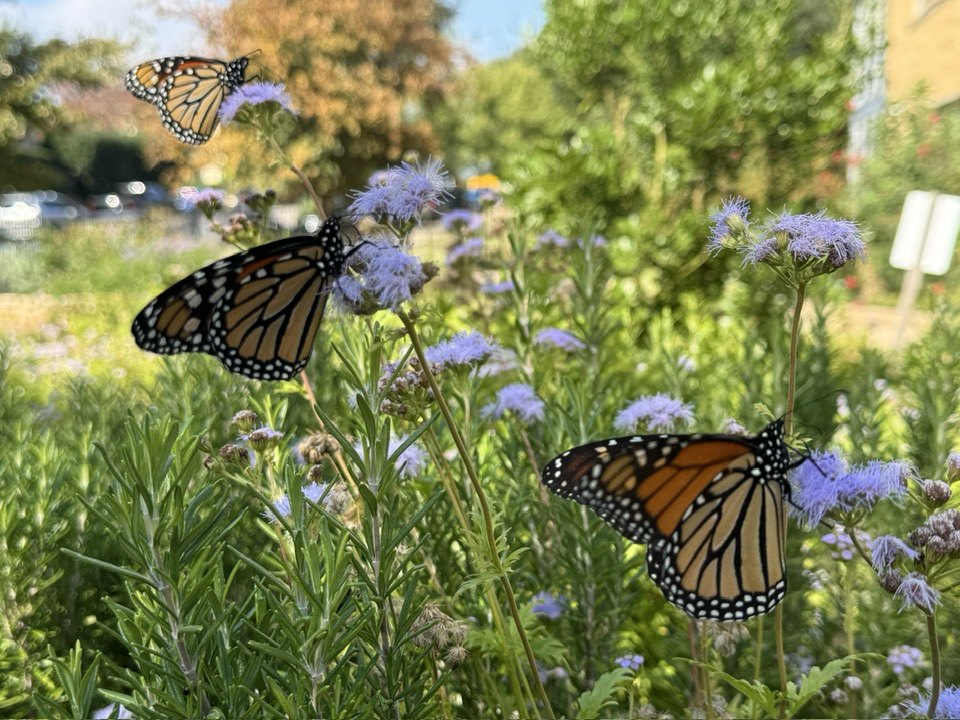
Monarch (Danaus plexippus)
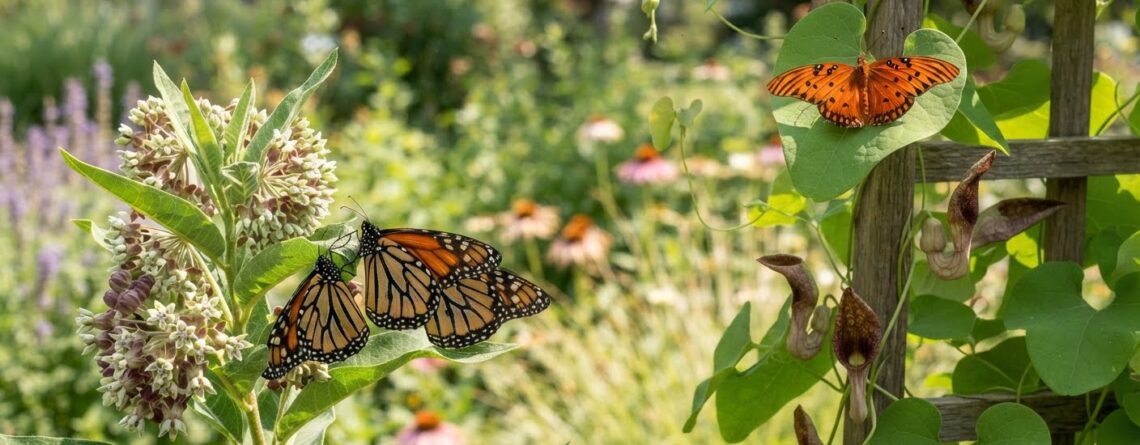
The Monarch is the most iconic of our orange butterflies and the official state insect of Texas. Every fall, Monarchs pass through our region on their long migration to central Mexico, where they overwinter in mountain forests until spring.
How to identify a Monarch:
- Bold, thick black veins across the wings
- Bright orange coloration with strong contrast
- White spots along the wing edges
- Larger and more elongated than the Queen
Caterpillars and host plants: Monarch caterpillars are striped in yellow, white, and black. They feed exclusively on milkweed species. Native milkweeds such as antelope horn and green milkweed are especially important for supporting their life cycle.
Fall behavior: During fall migration, Monarchs often glide on warm air currents and pause in gardens to refuel on nectar. Mistflower, lantana, zinnias, and tithonia are reliable nectar sources that help them build energy for the final push to Mexico.
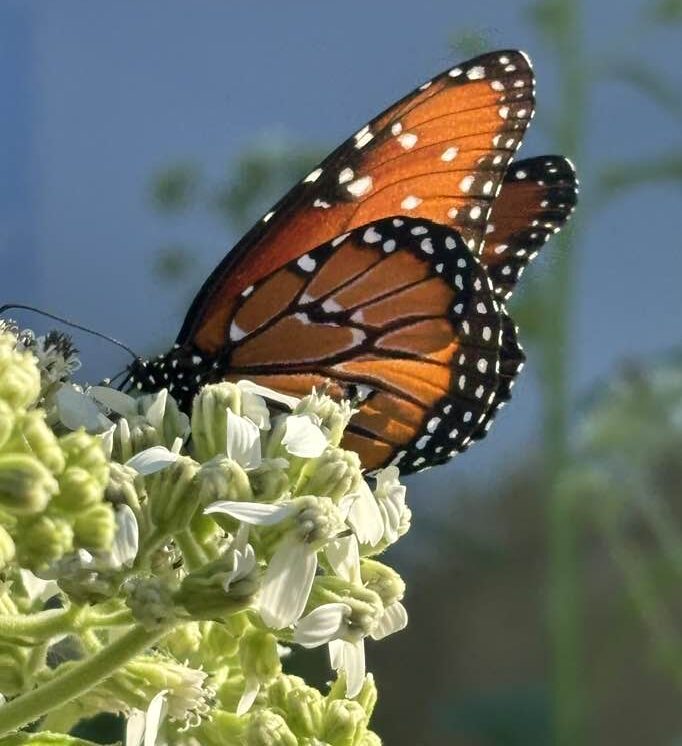
Queen (Danaus gilippus)
The Queen is a close relative of the Monarch and often flies alongside it in the fall. At first glance, the Queen looks like a darker, richer version of the Monarch. The wing pattern is the best way to distinguish the two.
How to identify a Queen:
- Fewer, thinner black veins than a Monarch
- Wings often appear deeper orange or chestnut
- A different pattern of white spots, especially near the forewings
- Slightly smaller and more compact in shape
Gulf Fritillary (Agraulis vanillae)
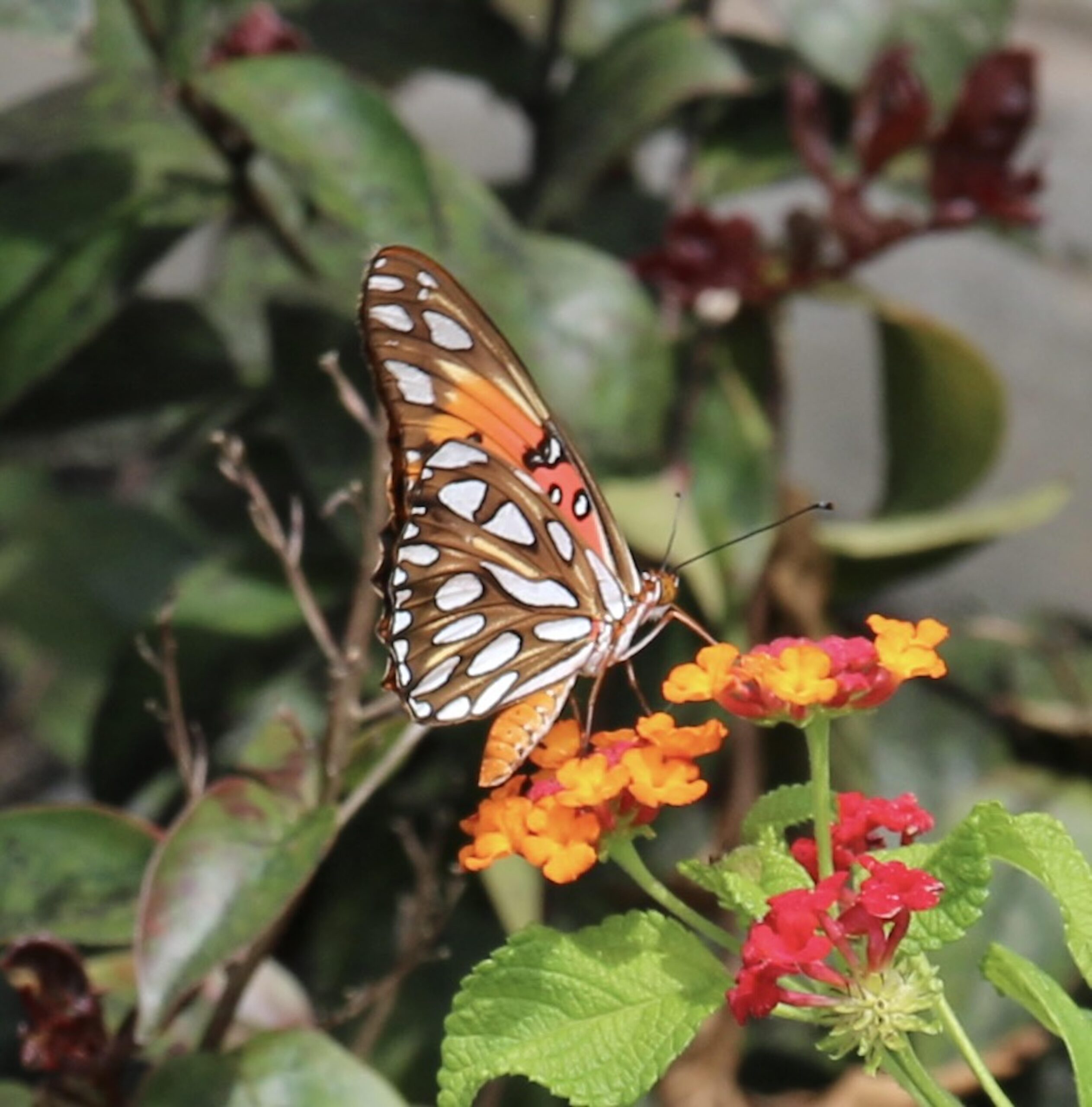
Gulf Fritillaries are common in Texas gardens from spring through fall. Their flight is quick and darting, and their color is a vivid orange. The underside of the wings provides the easiest identification clue.
How to identify a Gulf Fritillary:
- Distinctive silver spots on the underside of the wings
- Narrower wings with a more elongated shape
- Upper side is bright orange with black streaks rather than veins
- Caterpillars feed on passionvine, not milkweed
Caterpillars and host plants: Gulf Fritillary caterpillars are bright orange with black spines. They look dramatic but are harmless to gardeners. Passionvine is their only host plant, and they will quickly find it wherever it is grown. Even a single vine on a fence can support multiple generations.
Fall behavior: Gulf Fritillaries remain active until frost. Their fast, zigzag flight makes them easy to spot. Because they do not migrate, they continue to lay eggs on passionvine throughout the fall season.
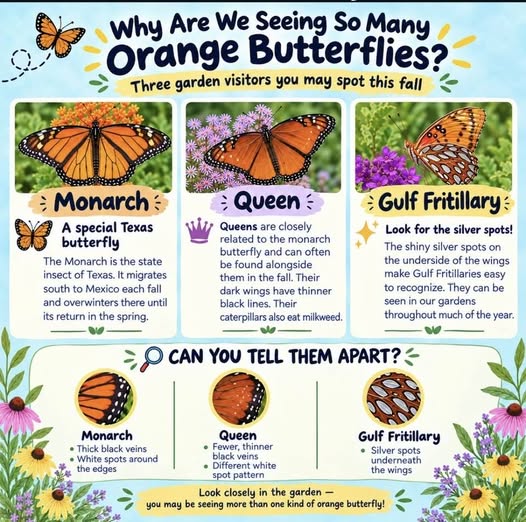
Quick Comparison at a Glance
- Monarch: Thick black veins, white edge spots, migratory, striped caterpillars on milkweed.
- Queen: Thinner veins, darker orange, similar striped caterpillars on milkweed, active later into fall.
- Gulf Fritillary: Silver spots underneath, passionvine host plant, bright orange caterpillars with black spines.
Why You Are Seeing So Many Right Now
Autumn brings peak Monarch migration, active Queen populations, and abundant Gulf Fritillaries. Warm weather, blooming nectar plants, and the presence of milkweed or passionvine create ideal conditions for all three species to appear together. Gardens that offer both host plants and nectar sources become natural gathering places for these butterflies.
Look closely the next time you see a flash of orange in your garden. With a bit of practice, you will be able to tell these butterflies apart and understand the plants and caterpillars that support them.