
Roughleaf Dogwood, Drummond’s Dogwood (Cornus drummondii)
- Botanical Name: Cornus drummondii
Common Name: Roughleaf Dogwood, Drummond’s Dogwood
Synonyms: Rough-Leaved Dogwood
Category: Shrub/Tree (Ornamental)
Family: Cornaceae
Lifecycle: Perennial
Lifecycle (Alt): Perennial
USDA Symbol: CODR
Hardiness Zone North: 4A
Hardiness Zone South: 9B
Sun Requirement: Full Sun (6+ hours)
Sun Requirement (Alt): Partial Shade (2-4 hours)
Water Requirement: Low
Growth Rate: Rapid
Maintenance: Low
Plant Adult Height: 15 – 25 ft.
Plant Adult Spread: 10 – 15 ft.
Plant Spacing: 8 – 15 ft.
Soil Preference: Adaptable
Soil pH Preference: Adaptable
Attracts: Bees, Birds, Butterflies, Moths
Resists: Deer, Disease
Tolerates: Clay Soil, Drought, Dry Soil, Erosion, Freeze, Heat, Heavy Shade
Miscellaneous: Wildflower, Native Plant (N. America), Tolerates Poor Soil
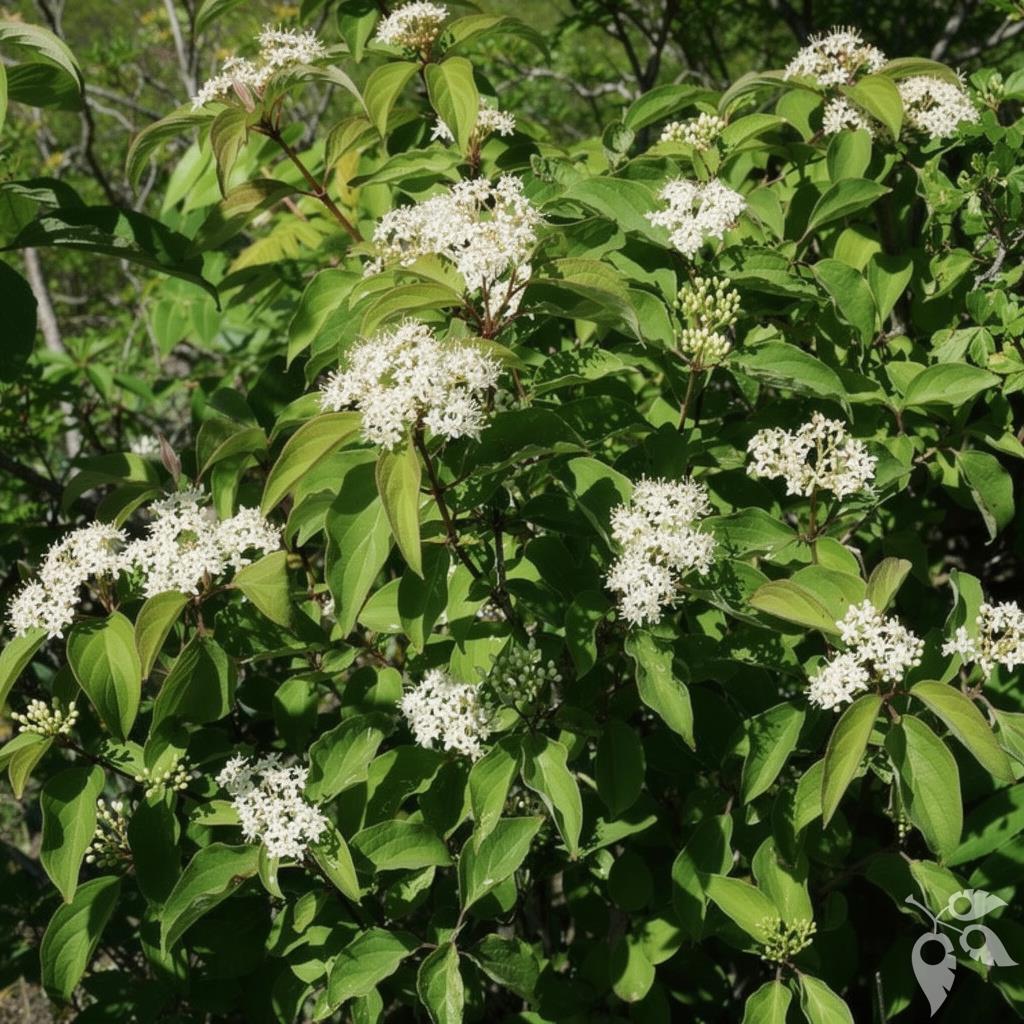
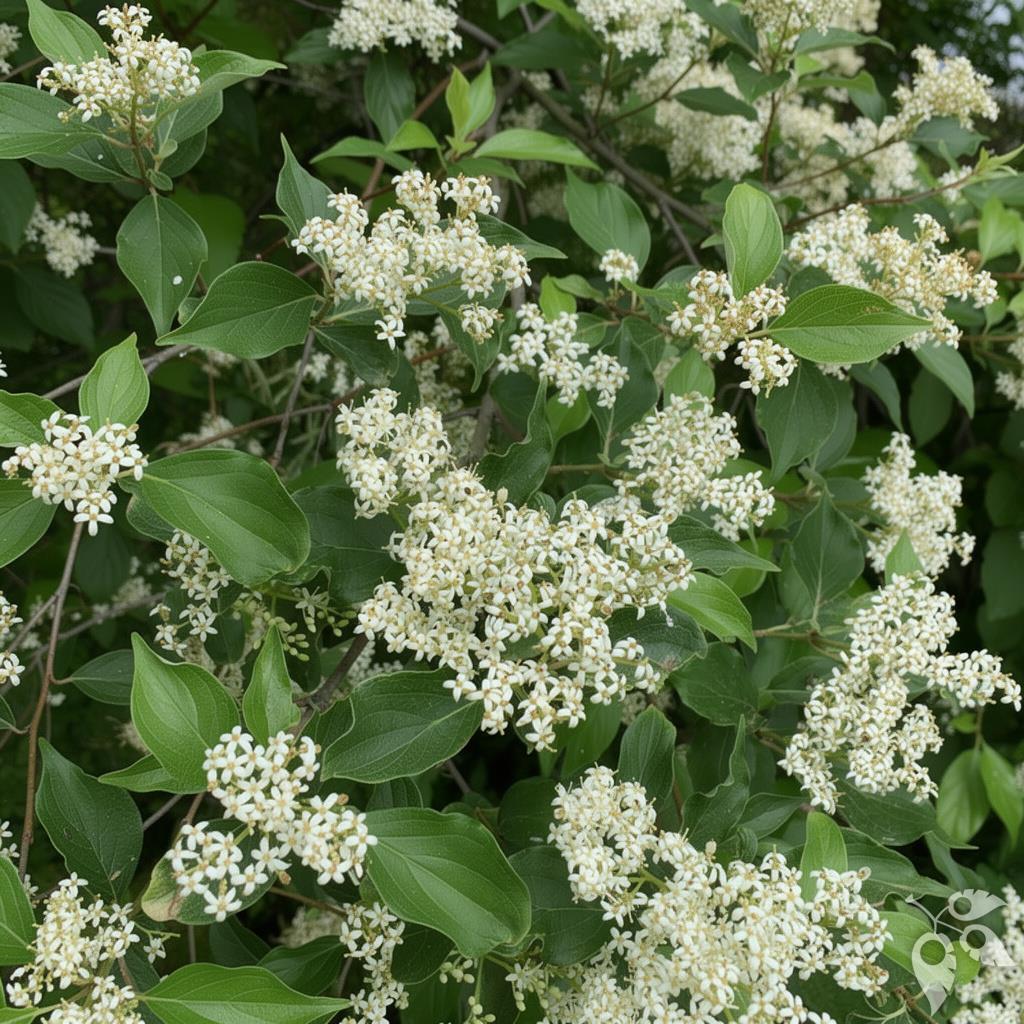
Description: Roughleaf Dogwood is a deciduous native shrub or small thicket-forming tree valued for naturalistic plantings, screening, and habitat gardens. It develops a broad, suckering habit with reddish to gray-brown twigs and noticeably rough, sandpapery leaves that create a coarse texture through the growing season, often followed by red to purple fall color.
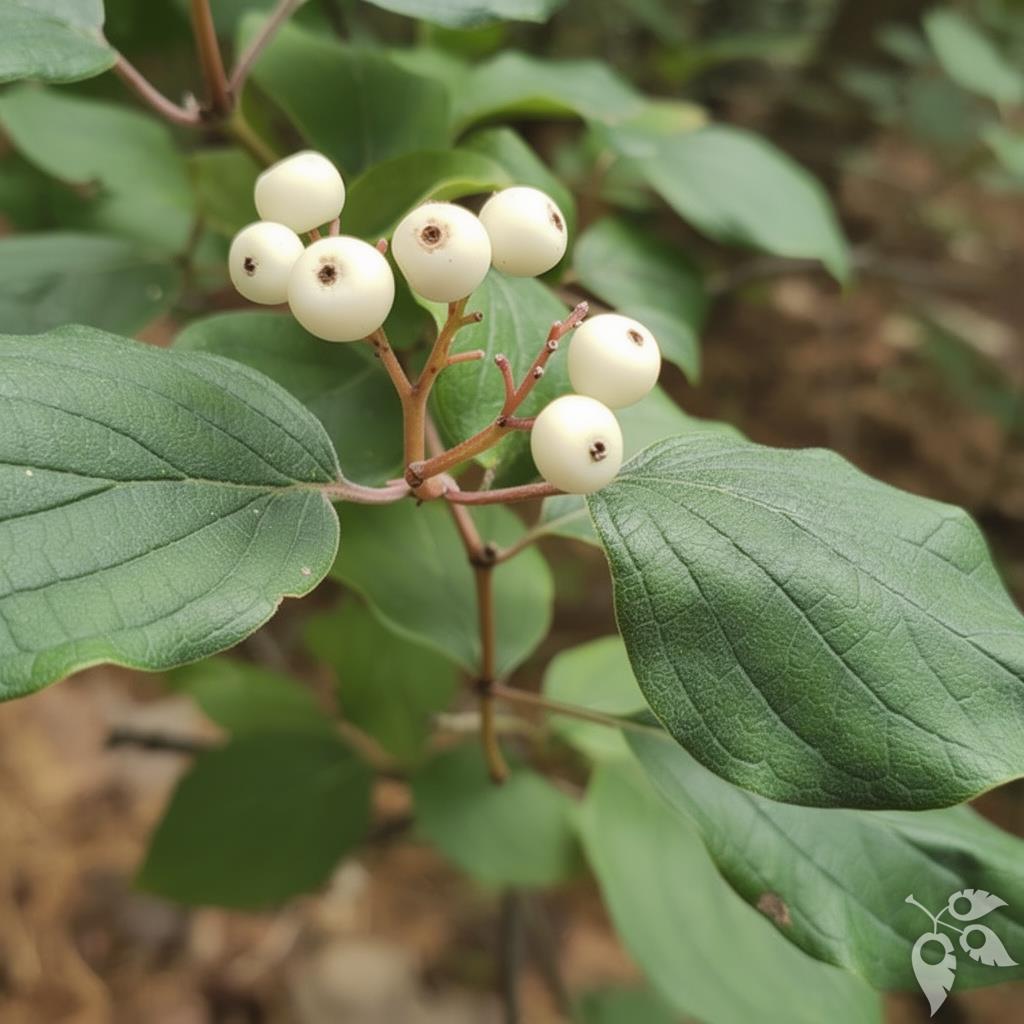
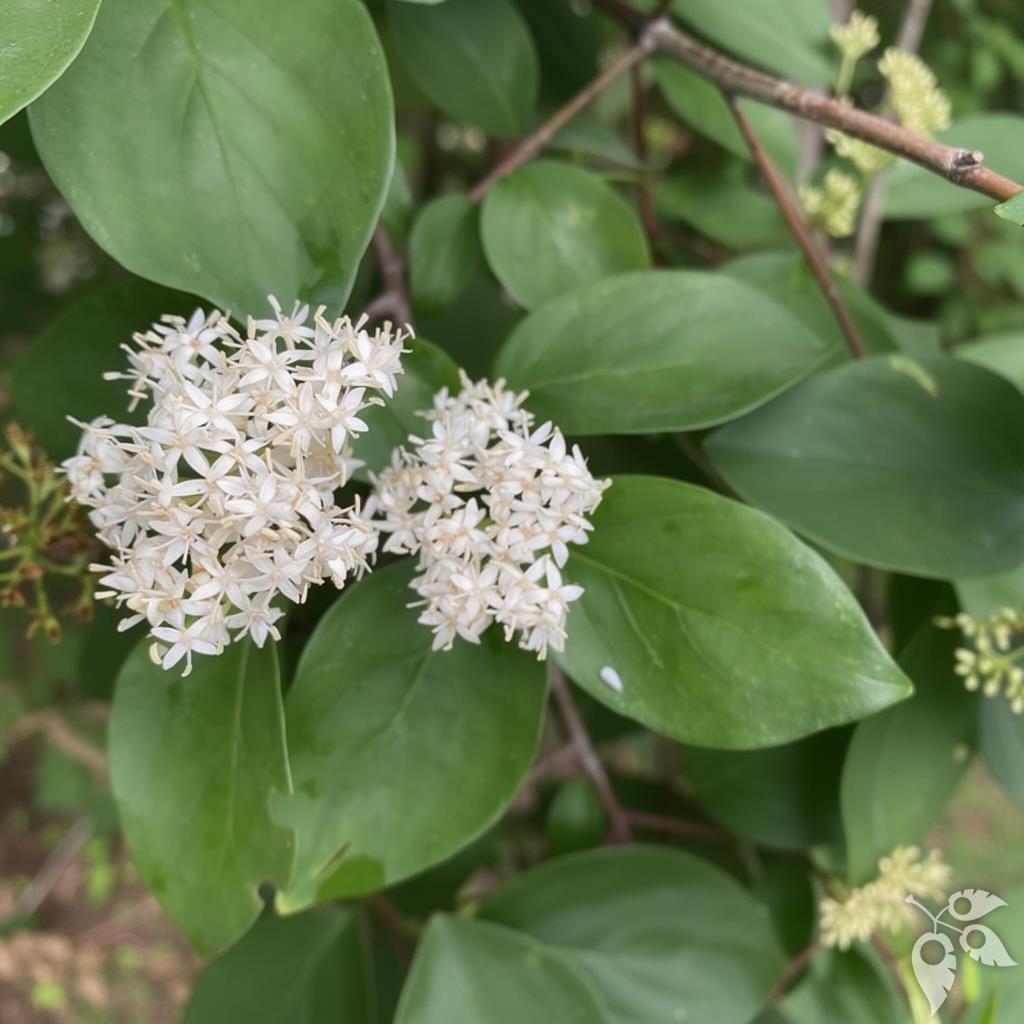
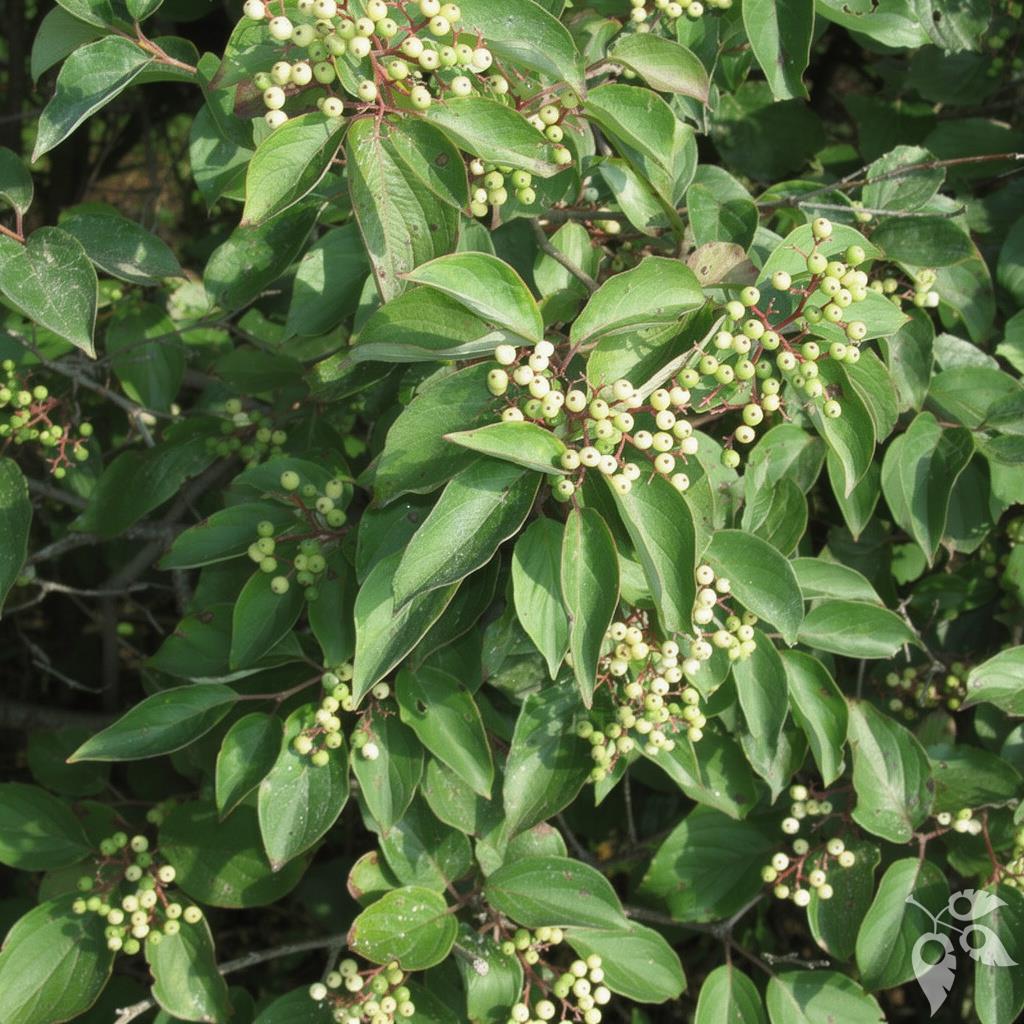
Flat clusters of small creamy white flowers appear in late spring to early summer, followed by white berries that are especially attractive to birds. It is well suited to borders, hedgerows, streambanks, prairie-style landscapes, and restoration plantings, and the flowers support a range of pollinators. Roughleaf Dogwood adapts to many soils, including clay, and tolerates heat, drought once established, periodic flooding, and windy, challenging sites. Beyond its garden use, it provides cover and nesting habitat for wildlife, and as a North American native it is a strong choice for gardeners seeking regional ecological value.
Planting: Plant Roughleaf Dogwood in full sun to partial shade, choosing well-drained soil that stays moderately moist at planting. It tolerates clay and loam but avoid sites that remain waterlogged. Dig a hole wide enough to spread the roots without bending them and set the shrub with its root flare or original soil line level with the surrounding soil. Backfill with the excavated soil and water thoroughly to settle it around the roots. Allow sufficient room between plants and nearby structures for normal mature development. Apply a shallow layer of organic mulch over the root zone to conserve moisture, keeping mulch away from direct contact with the stems.
Plant Care: Roughleaf Dogwood grows in full sun to partial shade; more sun generally supports denser growth. Keep the soil evenly moist during active growth, especially during prolonged dry weather, but allow good drainage and avoid persistently waterlogged soil. It tolerates clay, sand, loam, acidic, and alkaline soils, so routine soil amendments are usually unnecessary. Established plants generally need little supplemental water except during extended dry periods. Apply a 2- to 3-inch layer of organic mulch over the root area, keeping it away from the stems, and refresh it as needed. Prune to remove dead or damaged wood and to maintain a strong structure, preferably during dormancy; thin crowded or unwanted stems at their base rather than shearing routinely. Monitor foliage and stems regularly for insect damage, discoloration, or dieback, and remove affected material with clean tools.
Fertilize: Routine fertilization is unnecessary for Roughleaf Dogwood unless a soil test shows a nutrient deficiency. Established plants are adapted to relatively low-nutrient conditions, and excess fertilizer, especially nitrogen, can injure roots or promote weak growth. If testing indicates a need, apply a light, balanced, slow-release fertilizer in early spring as new growth begins, following the product label rather than using an unsupported rate. Spread it evenly over the root zone, keep it off the trunk and foliage, and water the application into the soil.
Do not fertilize drought-stressed plants or newly planted specimens during their first growing season. Container-grown Roughleaf Dogwood may need feeding only when testing or clear nutrient deficiency indicates it, because confined soil can accumulate soluble salts.
Prune: Routine pruning is optional for Roughleaf Dogwood and is mainly useful for cleanup, structural training, or size control. Remove dead, damaged, crossing, or crowded branches during dormancy, cutting just outside the branch collar without leaving stubs. To train a single-trunk form, remove competing stems gradually, keeping the strongest, straightest leader. For a natural multi-stemmed shrub, selectively thin unwanted stems rather than shearing the outer growth. When reducing a branch, cut just above a healthy bud or branch junction and preserve the plant’s informal shape. If substantial renewal is needed, spread removal of older stems over more than one season to retain flowering and fruiting wood. Use sharp, clean tools and avoid unnecessary heavy pruning that leaves large knobs or weak regrowth.
Pest & Disease: Roughleaf Dogwood usually has few serious pest or disease problems, but monitor for scale, mites, leafminers, borers, leaf spots, twig blight, cankers, and powdery mildew. Scale may appear as small, stationary bumps with yellowing leaves; mites can cause stippling or fine webbing; and borers may produce roughened bark, holes, sawdust-like material, or branch dieback. Leaf spots cause distinct discolored lesions, while powdery mildew produces a white coating on leaves. Remove and discard affected leaves, twigs, and branches, rake up fallen leaves, keep foliage as dry as practical, and improve air movement by removing nearby vegetation when appropriate. Wash small insect infestations from foliage or remove pests by hand and preserve beneficial insects by avoiding unnecessary broad-spectrum treatments. If problems persist or become damaging, use only a product whose label specifically lists the identified pest or disease and Roughleaf Dogwood, following all label directions for timing, application, protective measures, pollinator precautions, and repeat treatments. Consult a qualified arborist for extensive borer damage or serious branch decline.
Attribution: This plant information is the copyrighted property of PlantTAGG, Inc. (www.planttagg.com) and is published with permission.
Link to Full Profile: https://ptln.io/MTAzNjI0