
Fall is for Planting

At the end of a long, hot summer, I am more than ready for a good dig in the garden, and there is hardly a better time to plant trees and shrubs than in the fall. Fall planting gives them a head start over plants newly purchased in the spring because they can get settled into warm soil while experiencing cool nights, and the roots can adapt during the winter= an ideal set of circumstances. Not only that, but late summer is when garden centers are eager to get rid of tree and shrub inventory; and there are plenty of sales.
For fall and winter color, annuals can be selected soon, although planting pansies during the last hot days of summer is not a good plan. Wait for the weather to cool on those, but begin planning for them and other cool weather plants like snapdragons, sweet alyssum and cabbages and kales. These beauties brighten up the landscape beautifully as soon as the weather begins to cool, and they are delightful in either perennial beds or containers.
A few colorful perennials to choose from are the hardier mums, asters and sedums such as Autumn Joy and various stonecrops. A particular favorite perennial of mine, the herb bloody sorrel, also known as red-veined dock (Rumex sanguineus) is also a nice addition. It is bushy with tall green leaves shooting upward and showing off their gorgeous red veins.
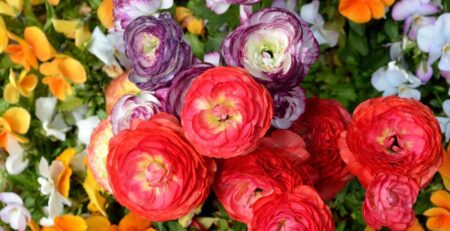
Moving on to a brief look at bulbs to plant in the fall, a rule of thumb is that bulbs that bloom in the spring should be planted in the fall – and flowers that bloom in the fall should be planted in the spring. So, for this time of year, we can prepare to plant grape hyacinths (muscari), snowdrops (Galanthus), Fritillaria, tulips, and daffodils. These bulbs will be available in garden centers soon but wait for cold soil to plant.
Let’s talk about shrubs that work well in North Texas and often provide year-round green, lending winter interest to the garden. Hollies are at the top of my list, and I have dozens in

several sizes and shapes. A particular favorite is Carissa holly (Ilex cornuta ‘Carissa’), which has glossy dark green leaves and a compact growth, reaching a height of 3-4 feet and a width of 3-6 feet after several years. Dwarf Yaupon holly (Ilex vomitoria) is extremely tough, and the tiny, evergreen leaves are a dark gray green. Do not let the word “dwarf” mislead you; as cute as they are in the little one- or three-gallon nursery pots, these plants can reach five feet tall and wide. Burford hollies (Ilex cornuta ‘Burfordii”) are another nice choice, and I have several that I have pruned into tree-form, which gives them more interest than a big green shrub might have. All of these hollies- and there are many, many more- do well in sun, part shade, or shade.
Another popular choice is Loropetalum, often called Chinese fringe flower, the beautiful burgundy-leaf plant that does not lose its leaves in the winter. There are several varieties of Loropetalum, and while many of the dwarf varieties do not seem particularly tough, there are some Loropetalums that reach 6-15 feet tall and wide. Determine your cultivar’s growth pattern before you plant. They do well in full sun or partial shade, but the burgundy color is best if they get at least four hours of sun per day. Sunshine Ligustrum (Ligustrum sinense ‘Sunshine’) is an easy to grow bright green to yellow shrub for sun to part shade reaching a size of 3-6 feet tall and 3-4 feet wide. It is somewhat overused in commercial sites around town in full sun locations, but the color is not as glaringly yellow when the sun does not hit the plant directly.

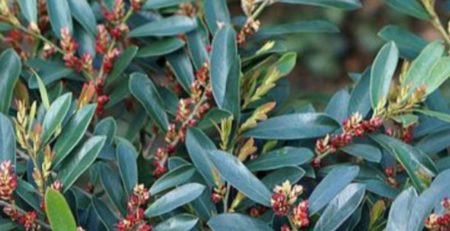
There is a spot flanking my front steps where I placed potted holly ferns five years ago as a temporary solution until I could decide what to plant there. The answer might be in my own back yard where I have a pair of Bejing Beauty™ mahonias that I purchased several years ago and planted along my back fence. They have done quite well with no attention and sailed through winter storm Uri in February 2021 without a single brown leaf. I like the looks of these plants and am considering them for the spot by the front steps.
Other shrub choices include Oakleaf hydrangeas, Little Henry sweetspire, Gold Thread™ spirea, and along with the afore-mentioned hollies, there are needlepoint hollies and the large Nellie Stevens hollies. As with trees, read about your choices before you buy them. Some shrubs, particularly some hollies, like Nellie Stevens and Burford, can get large. Planting a cute little holly near the patio only to find out it will grow to twenty tall and fifteen wide might cause some problems. Pruning is an option to keep some shrubs the size you want, but a better selection of cultivar may make more sense.
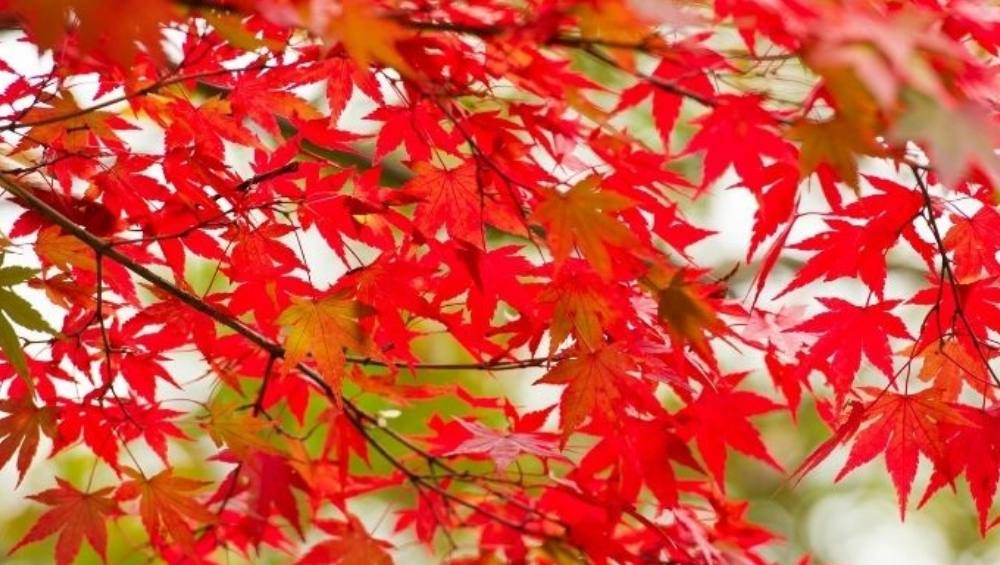
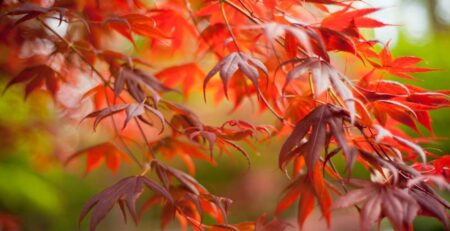
Fall is the absolute best time to plant a tree, and now is the time to start thinking about where you need a tree and what you want in that tree, if the location is sun or shade, whether you prefer evergreen or deciduous, etc. Decide on your preferred tree for the location, and start prepping the area. You may even want to dig the hole before you purchase the tree. If you have a dappled sun or somewhat shady spot where you need a small tree, a few great choices for understory trees are redbuds, Mexican plums, smoke trees, and Japanese maples. Texas A&M has a Texas Tree Selector site https://texastreeplanting.tamu.edu where dozens of trees are identified with descriptions of the growth rate, water needs, notable features, and other valuable information.
If you need a large tree, we are fortunate to have numerous tree and plant nurseries in North Texas where the varieties sold are particularly suited to our area. Some suggestions are lacebark elm, almost any oak tree, including Bur oak (Quercus macrocarpa), southern live oak (Quercus virginiana), and

Chinquapin oak (Quercus muehlenbergii), Ginkgo (Ginkgo biloba), pecan, and southern magnolia. When you narrow down your list, read everything you can find about your selections because most trees have both pros and cons. My four pecan trees are messy for about three months out of the year, starting with the fuzzy green catkins in the spring that coat everything in a green film, then the pecans dropping in the fall, followed by leaves that cover my patio and yard a foot deep in late fall and early winter. In the front yard I have two fifty-year-old southern magnolias that can drop leaves year-round, enough to require raking for half the year. These leaves are like shoe-soles and do not benefit the compost pile. Bald cypress trees have knobby knees expanding as far as ten feet out from the trunk that almost prohibit mowing, and Live oak trees (Quercus virginiana), as gorgeous as they are, can sometimes shade the ground too much for successful lawns. Chinese Pistache (Pistacia chinensis), on the other hand, offers nicely dappled shade, has leaves that seem to curl up and vaporize after they fall, and has a nice wide growth pattern. The clusters of red seeds that fall in the winter attract birds, but because of this there are some areas, including central Texas, where the tree has become invasive.


Start writing your lists and researching your choices. Not only will you enjoy your fall plantings for the next few months, but in the spring you will be so pleased with the head start you have made on planting your new shrubs or trees.