
Planting for Pollinators: Successful May Gardening in North Texas

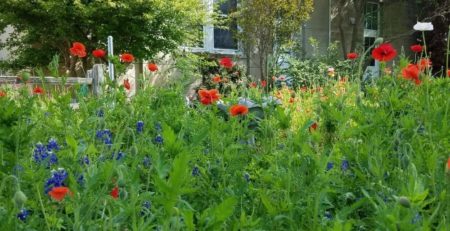
Every May, North Texas gardeners walk a tightrope between enthusiasm and caution. Our weather can’t quite make up its mind, but the pollinators certainly can—they’re ready for nectar, habitat, and a place to call home. That’s why this is the moment to finish planting the native and adapted species that will carry your garden through the heat ahead. With thoughtful placement, mindful watering, and a little early pampering, these plants will reward you all summer long with color, resilience, and the joyful buzz of life returning to the
garden. A pollinator garden is never truly finished, but that’s part of the beauty: each season invites us to learn, adjust, and grow right alongside it.
May is still an excellent time to add reliable pollinator favorites such as Gregg’s mistflower, rock rose, blackfoot daisy, mealy blue sage, and autumn sage. These dependable bloomers provide nectar throughout the hottest months and support everything from monarchs and queens to hummingbirds and native bees.
If you’re looking to expand even further, consider adding some of these additional May‑friendly North Texas pollinator plants:
- Engelmann Daisy – early-season nectar source, tough and drought‑tolerant
- Zexmenia – long-blooming, heat-loving, and a butterfly magnet
- Lantana (Texas Lantana) – nonstop summer color, adored by butterflies and hummingbirds
- Turk’s Cap – thrives in shade or sun, a hummingbird favorite
- Purple Coneflower – excellent nectar source and later provides seed for birds
- Standing Cypress – tall red spires that hummingbirds can’t resist
- Rock Penstemon – brilliant red blooms, thrives in rocky or well-drained soils
- Four-nerve Daisy – compact, cheerful, and blooms nearly year-round
- Frogfruit – a low-growing groundcover that hosts multiple butterfly species
Healthy, well‑placed plants don’t just thrive—they bloom more consistently, providing the nectar and habitat our bees, butterflies, and hummingbirds depend on.
To ensure success with your new acquisitions, here are a few tips that I’ve found helpful.
Always find the best spot for your new plant. Do your homework and know the sun/shade requirements before you plant. According to the experts, here are the sun requirements for the various categories:
- Sun – 6 to 8 hours of sun
- Part Shade – 4 to 6 hours of morning sun
- Shade – less than 4 hours of morning sun
- Full Shade – less than 1 hour of morning sun


It’s also important to know the watering needs of your new plants. Watering in the morning is always preferable. When you water, try to apply the water to the soil rather than the leaves. It is also important to water thoroughly. This encourages strong root development. Most native plants thrive when watered deeply and then allowed to dry before being watered again. Too much water can kill a plant as quickly as too little water. If you are concerned about when to water, a moisture meter is an inexpensive and accurate way to check.
I have found that new plants need some pampering as they accommodate to their new homes. If possible, plant on a cloudy day. If that isn’t an option, consider planting in the early evening. It’s also very
important to avoid planting on windy days. If your new plant shows symptoms of root girdling, please untangle the roots or make horizontal cuts to solve the problem. After successfully placing and planting your new addition, always water it completely. Many plants also benefit from a healthy layer of mulch. This will help regulate the soil temperature and reduce moisture loss.
Check your new plants daily for a few days and water as needed. Plants are generally at their peak performance in the early mornings, so that’s the best time to check. Finally, enjoy your new additions—and enjoy the pollinators who will soon enjoy them too.