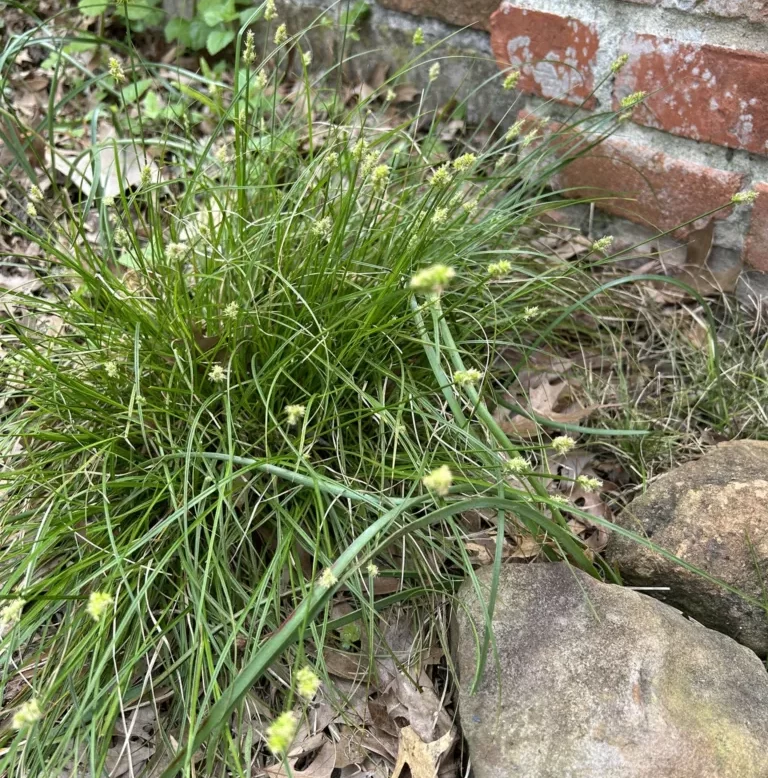
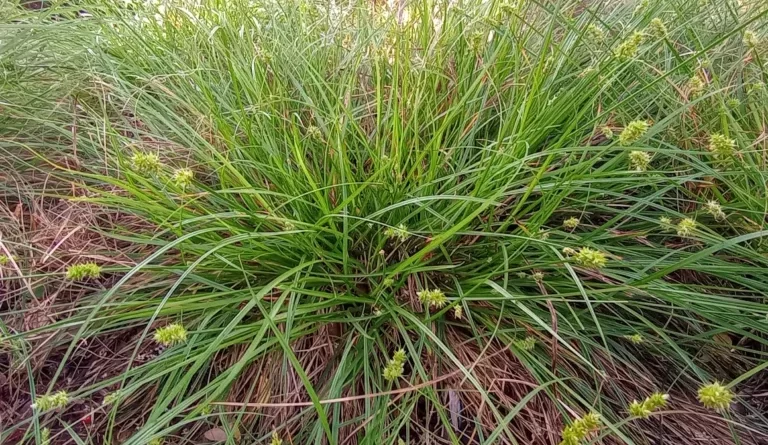
Sedges perform important ecosystem services.
Many gardeners hear “sedge” and immediately think of nut-sedge, the weed that takes over the yard. There are other varieties of sedge, however, that make great landscape plants.
Sedges may look like grass, but they are not true grasses. Instead, they belong to the plant family Cyperaceae. Nut sedges belong to the genus Cyperus, while the sedges we are concerned with fall within the genus Carex. Carex sedges tend to be clump forming, slower growing and generally more well behaved than their invasive relatives.

In their native habitats, Carex sedges perform important ecosystem services. Their fibrous roots help stabilize soils, their seeds serve as food for wildlife, and the foliage provides nesting material for birds. Some species act as host plants for native butterflies and moths. Sedges thrive in a remarkable variety of environments, from full sun to shade, and in soils that range from wet to dry and even sandy conditions.
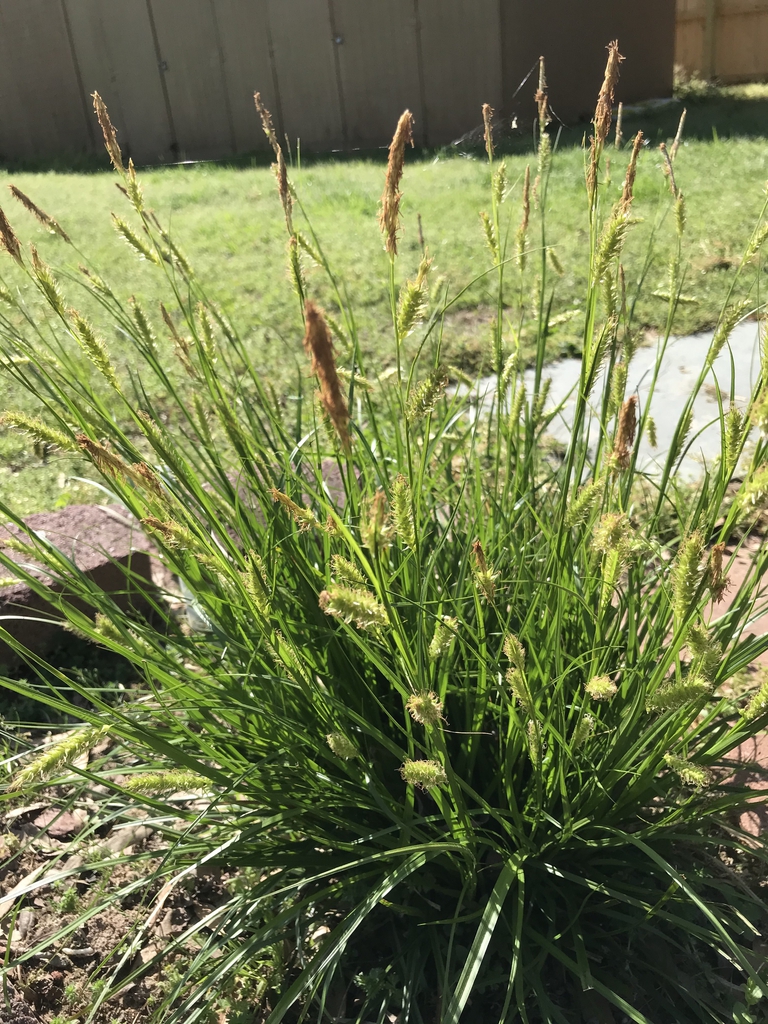
In the landscape, you can use sedges anywhere you would traditionally use grass. Many sedges can thrive in shady spots where conventional turf grass struggles. Once established, these plants are typically drought tolerant and low maintenance. Sedges can also be used in borders and work well as accent plants and serve as a good native substitute for liriope. There is even research being conducted on creating sedge lawns. When incorporating sedges into your landscape, keep in mind that they are cool season growers and will go partially dormant during the heat of summer, with growth picking up again as temperatures cool in the fall.
Many of the Carex species you find in local plant stores are non-native species, which are often showier, but may not provide the wildlife benefit of natives. Ornamental varieties of Carex recommended to try in north Texas include cultivars of Japanese species including C. oshimensis, C. morrowii and C. phyllocephela. Cultivars of species from New Zealand include C. testacea and C.buchananii. For native plant enthusiasts, there
are a number of north American native species of Carex that might flourish in North Texas, but these may not readily available in nurseries and you might have to look for them online. When shopping for native Carex, research the cultural requirements of your selection to make sure you are getting a sedge to match your site. While native plants are not considered to be invasive, they can be aggressive if planted in the wrong spot (think inland sea oats). Native species of Carex suggested for use in north Texas include the following:
Carex texensis: https://plants.ces.ncsu.edu/plants/carex-texensis/
Carex perdentata: https://www.wildflower.org/plants/result.php?id_plant=cape40
Carex cherokeensis: https://www.wildflower.org/plants/result.php?id_plant=cach3
Carex planostachys: https://www.wildflower.org/plants/result.php?id_plant=capl3
Carex leavenworthii: https://www.wildflower.org/plants/result.php?id_plant=cale6
If you want to learn more about sedges, visit the following:
https://texasgardener.com/…/carex-edgy-sedges-for-the…
https://plants.ces.ncsu.edu/plants/carex/