
Mexican Bush Sage (Salvia leucantha)

- Botanical Name: Salvia leucantha
Common Name: Mexican Bush Sage, Velvet Sage
Synonyms:
Category: Perennial
Family: Lamiaceae
Lifecycle: Perennial
Lifecycle (Alt): Annual
USDA Symbol: SALE9
Hardiness Zone North: 7B
Hardiness Zone South: 10B
Sun Requirement: Full Sun (6+ hours)
Sun Requirement (Alt): Partial Shade (2-4 hours)
Water Requirement: Low
Growth Rate: Rapid
Maintenance: Low
Plant Adult Height: 3-4 ft.
Plant Adult Spread: 4-6 ft.
Plant Spacing: 3-4 ft.
Soil Preference: Adaptable
Soil pH Preference: Adaptable
Attracts: Bees, Butterflies, Hummingbirds
Resists: Deer, Disease
Tolerates: Clay Soil, Drought, Dry Soil, Heat
Miscellaneous: Wildflower, Tolerates Poor Soil
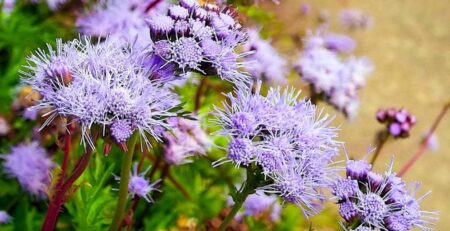
Description: Mexican Bush Sage is a warm-climate perennial subshrub grown for its long season of soft, velvety color in mixed borders, pollinator gardens, and informal landscapes. It forms a loose, rounded mound with numerous upright to arching, square stems clothed in gray-green, lance-shaped leaves that are softly hairy and give the plant a pleasantly textured, slightly silvery look. From summer into fall, and often up to frost, it carries long, arching spikes of striking bicolor flowers: rich purple, fuzzy bracts and calyces surrounding short-lived white or lavender tubular


blooms that create an airy, fountain-like effect. These flower spikes are highly attractive to hummingbirds and butterflies and can provide valuable late-season nectar when many other plants have finished flowering. Mexican Bush Sage is typically used in sunny borders, xeric or water-wise plantings, and Mediterranean-style designs, where its drought tolerance and good heat performance are assets once it is established. In many North American gardens it is treated as a perennial in mild climates or as a fast-growing warm-season plant where winters are colder, and it is valued for adding soft texture, movement, and pollinator activity to the garden during the latter half of the growing season.
Planting: Choose a planting site with full sun for most of the day; very hot climates can benefit from light afternoon shade. Use soil that drains well and is not constantly wet; a moderately rich, sandy or loamy soil works well, while heavy clay should be improved with organic matter to enhance drainage. Prepare the bed by loosening the soil a bit wider than the root ball. Dig a hole as deep as the root ball and slightly wider, and set the plant so the top of the root ball and crown sit at or just above the surrounding soil surface. Backfill gently and avoid burying the stems. Allow enough open space around the plant for normal mature spread and good air flow. After planting, water slowly and deeply to settle soil around the roots. Apply a light layer of organic mulch over the planting area to help conserve moisture and reduce weeds, keeping mulch a small distance away from the stems of Mexican Bush Sage.
Plant Care: Mexican Bush Sage grows best in full sun, with at least 6 hours of direct light daily; it can tolerate light afternoon shade where sun is intense. Keep soil well drained and not soggy; sandy or loamy soil is fine, and richness is helpful but not essential. Water regularly during active growth until the plant is well established, then water deeply but infrequently, allowing the top few inches of soil to dry slightly between waterings and stepping up irrigation only during extended heat or dry periods. Avoid constantly wet soil, which encourages weak, leggy growth and root problems. Apply a light, balanced fertilizer or compost in early spring; avoid heavy nitrogen so stems stay sturdy and flowering remains strong. In late winter or early spring, once old stems have finished, cut back the previous season’s growth close to the base to encourage dense new shoots, and lightly trim or shear during the growing season if you want a more compact shape. In containers, use a high-quality, freely draining potting mix and monitor moisture more often, since pots dry faster, adjusting water as needed to keep Mexican Bush Sage healthy.
Fertilize: Routine fertilization is unnecessary for Mexican Bush Sage, and too much nitrogen can make it leggy and reduce flowering. If you want to feed it, use a light, slow-release, balanced fertilizer in early spring or a thin layer of compost, and avoid heavy or frequent applications. For container-grown plants, a potting mix with slow-release fertilizer pellets is usually enough for a season, and a single spring feeding is typically sufficient for perennial containers.

Prune: Routine pruning is optional for Mexican Bush Sage; it usually needs only cleanup and light shaping. Remove dead, damaged, or frost-killed stems anytime, and pinch or trim spent flower spikes to keep the plant tidy and encourage more bloom. In late winter or early spring, cut back the oldest woody stems and any lanky growth to fresh shoots near the base, but avoid hard shearing into leafless old wood. If the plant becomes thin or overgrown, renew it gradually over one or two seasons by taking out a few older stems at a time.
Pest & Disease: Mexican Bush Sage is usually trouble-free, but the most common problems are root and crown rot in poorly drained or overwatered soil, powdery mildew during crowded, humid conditions, and occasional sap-feeding pests such as aphids, whiteflies, or spider mites on stressed plants. Watch for yellowing, wilting that does not improve after watering, white powdery growth on leaves, sticky residue, distorted new growth, fine webbing, or stippled foliage. Improve drainage, water only when needed, avoid wetting the foliage, space plants for air movement, and remove badly affected leaves or stems to slow spread. Rinse small pest populations off with a strong spray of water, then monitor weekly for rebound. If infestations become heavy, use a label-approved insecticidal soap, horticultural oil, or other product specifically listed for the pest and for Mexican Bush Sage, and follow the label exactly for timing, coverage, protective measures, and pollinator precautions. Remove and discard plants or stems that are collapsing from rot, because recovery is unlikely once roots or crowns are badly damaged.
Attribution: This plant information is the copyrighted property of PlantTAGG, Inc. (www.planttagg.com) and is published with permission.
Link to Full Profile: https://ptln.io/NzY4Mzc