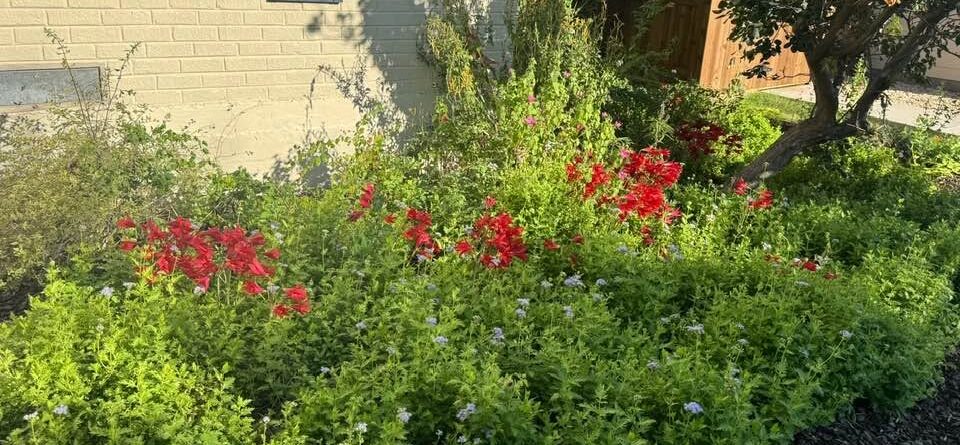
Oxblood Lilies: A North Texas Heirloom That Welcomes the Start of Fall
Oxblood lilies (Rhodophiala bifida), often called schoolhouse lilies, are among the most reliable heirloom bulbs in North Texas gardens. Their timing is part of their charm. After months of relentless heat and drought, the first measurable rain and a shift toward cooler nights triggered a sudden flush of deep red blooms. The display often arrives just as school begins in early fall. This year’s weather pattern has produced an especially abundant show across the region.
A Distinctive, Old-Fashioned Beauty
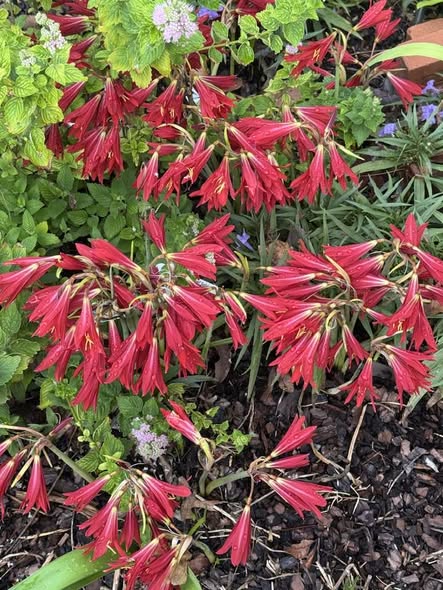
The flowers resemble a small amaryllis. They are upright, trumpet shaped, and intensely colored. The oxblood red is unmistakable. It is rich, saturated, and striking against late summer soil. Each bulb produces a cluster of blooms, and mature clumps can create a dramatic mass of color. Their foliage appears later, in winter and early spring, storing energy for the next year’s show.
Why They Thrive in North Texas
North Texas’ climate suits oxblood lilies remarkably well. Hot summers, periodic drought, and unpredictable rainfall do not deter them. Texas A&M AgriLife Extension identifies Rhodophiala bifida as one of the hardiest pass along bulbs in the state. The bulbs tolerate heat, require well drained soil, and respond strongly to seasonal rain events.
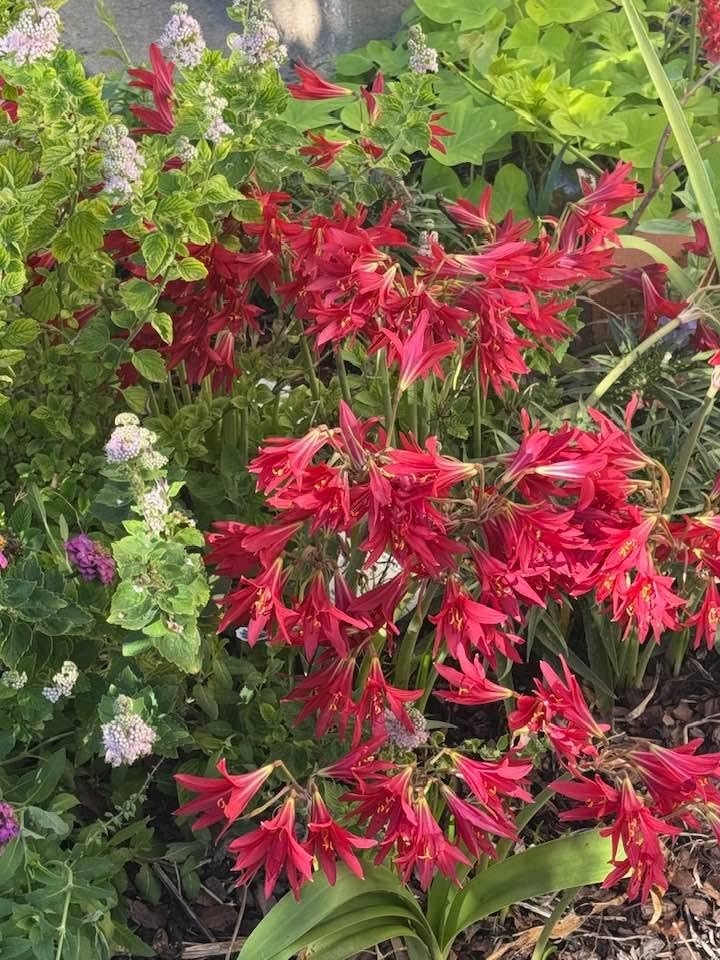
They also naturalize over time. Each year, bulbs multiply underground and form larger clumps that bloom more generously. They are not invasive, but they are persistent. This makes them ideal for gardeners who appreciate plants that quietly improve with time.
Growing Tips for North Texas
Research based guidance from Texas A&M AgriLife and other university horticulture programs aligns well with what local gardeners observe.
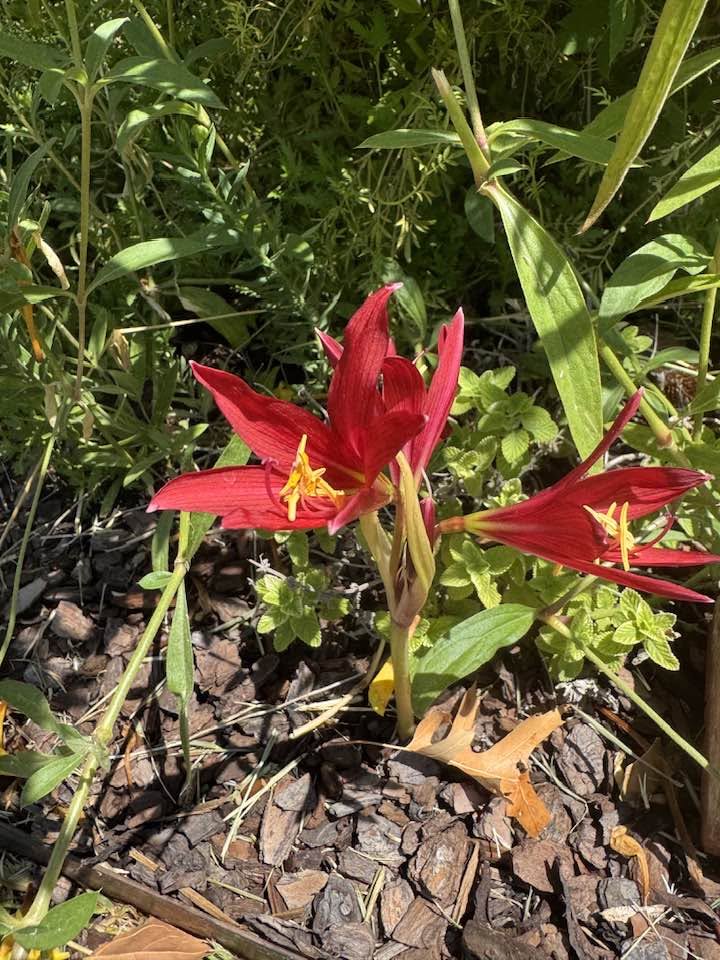
- Planting depth: Set bulbs so the neck sits at or slightly above the soil surface.
- Location: Choose a spot with sun or bright shade. Partial shade can help maintain soil moisture during intense summer heat.
- Soil: Well drained soil is essential. Amending heavy clay with compost or expanded shale improves drainage and root health.
- Watering: Once established, they need very little supplemental water. Their bloom cycle is triggered by natural rainfall and seasonal change.
- Foliage care: Allow winter and spring leaves to remain until they yellow naturally. This fuels next year’s blooms.
Dividing and Sharing
Because oxblood lilies multiply steadily, dividing them every few years keeps clumps vigorous and allows gardeners to share bulbs with friends or spread them to new areas of the garden.
- Best time to divide: Late spring to early summer, when foliage has died back and bulbs are dormant.
- Method: Lift the clump gently with a garden fork, separate the bulbs by hand, and replant immediately.
- Spacing: Place bulbs several inches apart to give them room to expand.
- Aftercare: Water lightly after replanting, then allow them to settle until fall rains arrive.
Dividing is optional. Many gardeners leave their clumps untouched for years. Periodic thinning can increase bloom production and prevent overcrowding.
A Reliable Marker of the Seasons
In a region where summer often overstays its welcome, oxblood lilies offer a reassuring signal that fall is on its way. Their sudden appearance after rain feels almost celebratory. It is a reminder that even the toughest landscapes can surprise us with beauty.
For North Texas gardeners who value heritage plants, drought tolerance, and dependable performance, oxblood lilies remain one of the most beloved heirloom bulbs. Their resilience, simplicity, and vivid color ensure they will continue to brighten gardens for generations.
References
Texas A&M AgriLife Extension
- Earth Kind Bulbs: Rhodophiala bifida (Oxblood Lily)
- Heirloom Bulbs for Texas Landscapes
- Soil Preparation and Raised Bed Gardening Guidelines
- Texas Superstar Program
University Extensions
- University of Arkansas Cooperative Extension. Bulb Division and Dormancy Guidelines.
- LSU AgCenter. Amaryllis Type Bulbs and Naturalizing Behavior in Warm Climates.
- Clemson Cooperative Extension. General Bulb Care and Planting Depth Recommendations.
Photos taken in the garden of first-grade teacher and DCMG Nicole Jones.